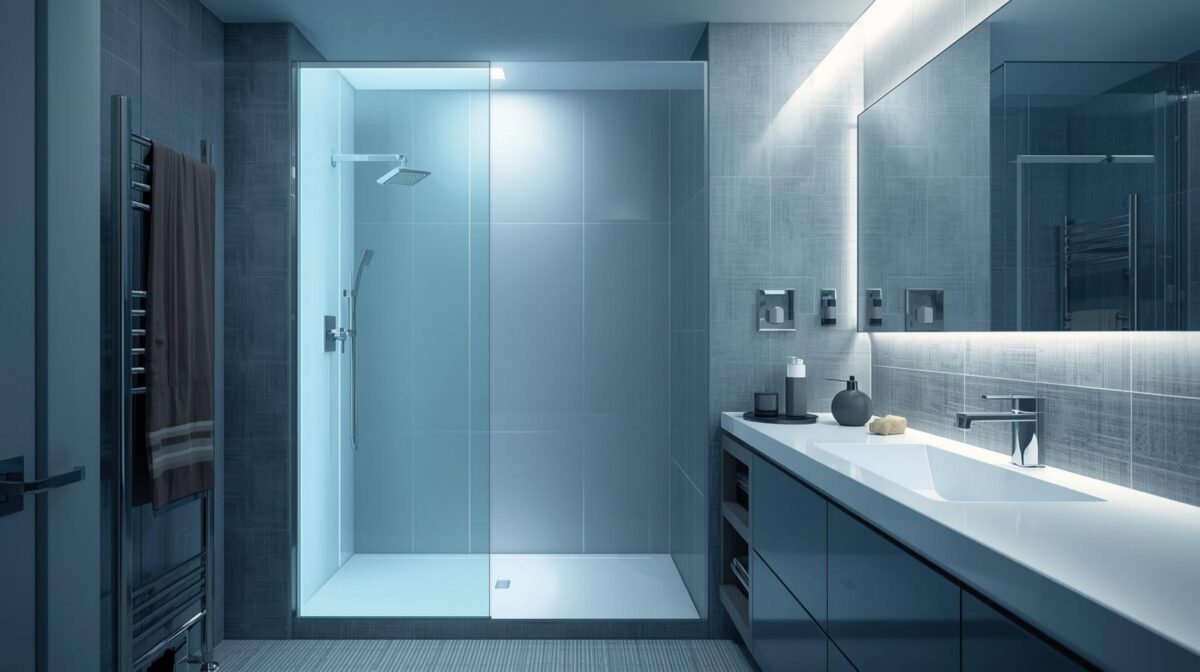
Bathroom Waterproofing: Why It’s the Most Important Step in Your Remodel
If you asked ten homeowners what the most important part of a bathroom remodel is, you’d probably hear answers like the tile, the vanity, or the shower fixture. And those are all things you see every day, so it makes sense they’d come to mind first.
But the most important part of your bathroom remodel is something you’ll never see once the project is complete. It’s the waterproofing.
Waterproofing is the hidden system that sits behind your tile and beneath your shower floor. It’s what keeps water exactly where it belongs and out of your walls, subfloor, and the rooms below your bathroom. When it’s done right, you never think about it. When it’s done wrong, or skipped entirely, it can lead to the most expensive kind of home repair: hidden structural damage from water infiltration.
What Bathroom Waterproofing Actually Involves
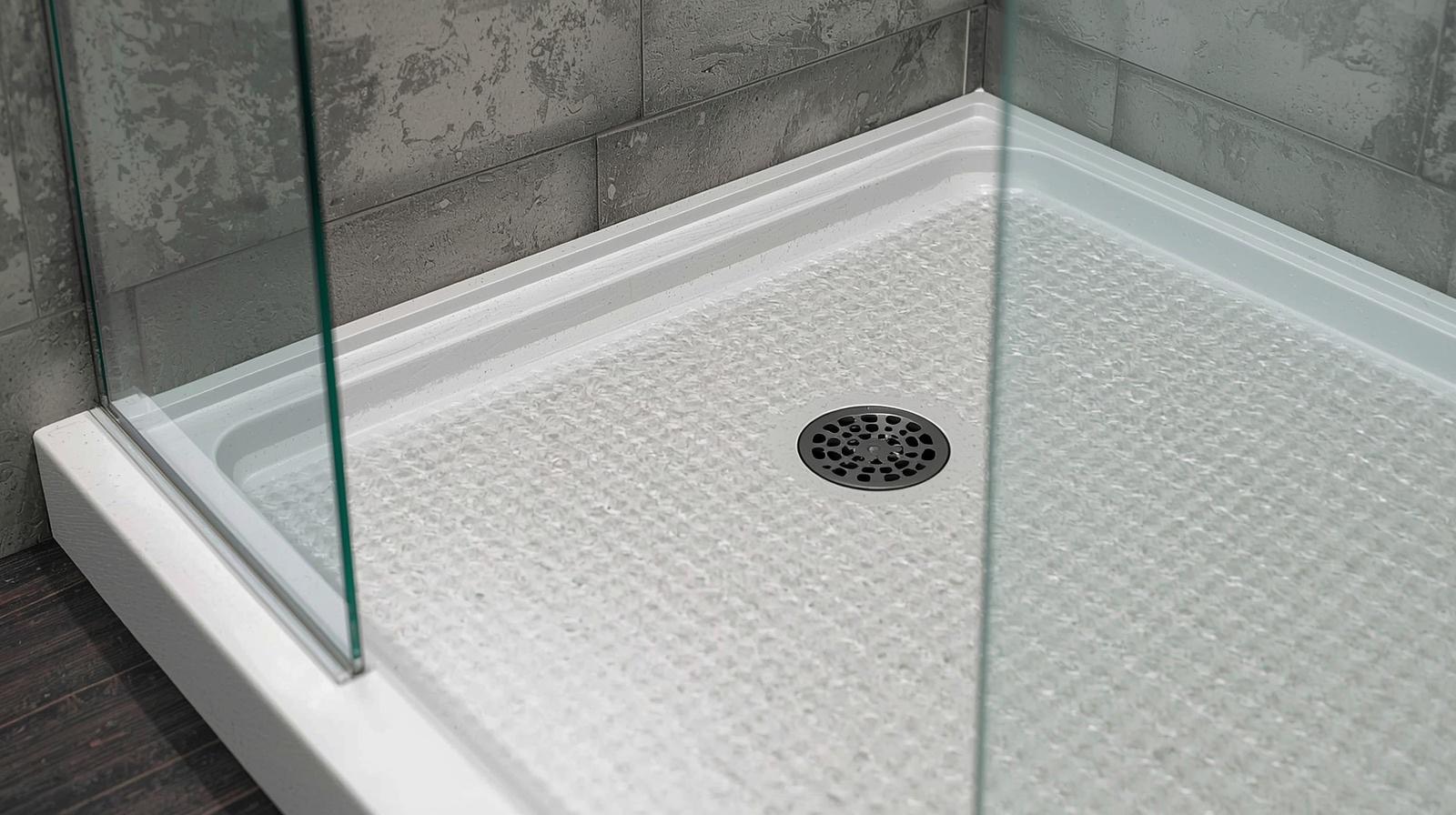
Waterproofing isn’t a single step. It’s a system of barriers that work together to manage the water in your shower, tub, and bathroom floor. Here are the key components.
The Shower Pan
The shower pan is the waterproof membrane that sits beneath your tile floor in the shower. Its job is to catch any water that makes it through grout lines or around the drain and direct it to the drain opening rather than letting it seep into the subfloor.
A properly constructed shower pan slopes toward the drain at a precise pitch, typically a quarter inch per foot. Too flat and water pools. Too steep and tile doesn’t hold. This is one of the areas where experience and precision matter enormously.
Wall Membranes
The walls inside your shower take the most direct water contact in the entire bathroom. A waterproof membrane applied to the wall substrate creates a continuous barrier that prevents moisture from reaching the framing and insulation behind it.
This membrane covers the full height of the shower walls, extending beyond the showerhead and wrapping around corners and niches where water can collect.
The Curb
The shower curb is the raised threshold at the shower entry. It serves a structural purpose: it contains water within the shower footprint and connects the wall membrane to the pan membrane, creating an unbroken waterproof envelope.
A leaking curb is one of the most common waterproofing failures. Water runs down the inside face of the curb and, if the membrane isn’t properly wrapped over the top and down both sides, it finds its way into the subfloor at the shower entry, often going undetected for months.
For homeowners considering a walk-in shower conversion with a curbless or low-threshold entry, the waterproofing strategy changes. Linear drains and precisely sloped floors replace the traditional curb, making professional installation even more critical.
Vapor Barriers
Beyond the shower itself, the broader bathroom benefits from vapor management. Moisture-resistant drywall (commonly called green board or cement board), proper ventilation, and vapor barriers in exterior walls all contribute to keeping moisture in check across the entire room.
Types of Waterproofing Systems
There are two primary approaches to shower waterproofing used in modern remodeling, and each has distinct advantages.
Sheet Membrane Systems
Sheet membrane systems like Schluter DITRA and Kerdi, or Wedi building panels, use pre-manufactured waterproof sheets or boards that are applied to the wall and floor substrate. These systems are bonded to the surface with thin-set mortar, and the seams are sealed with waterproof tape or band.
Advantages: Consistent thickness, factory-controlled quality, and well-documented installation procedures. These systems are widely considered the gold standard for shower waterproofing among professional remodelers.
Wedi boards go a step further by combining the waterproof membrane and the substrate into a single rigid panel. This eliminates the need for cement board underneath, reduces wall thickness, and speeds up installation.
Liquid-Applied Membranes
Liquid-applied waterproofing uses a paint-on or trowel-on compound that cures into a flexible, waterproof membrane. Products like RedGard and Hydroban are common choices. The liquid is applied in multiple coats to achieve the required mil thickness, and it conforms to irregular surfaces and corners.
Advantages: Easier to apply in complex geometries, seamless coverage, and lower material cost. However, quality depends heavily on application technique. Too thin and it won’t provide adequate protection. Uneven coverage creates weak spots.
Which System Is Better?
Both systems work well when installed correctly. The choice often depends on the contractor’s expertise and the specific project requirements. What matters most is that the system is installed as a complete, continuous envelope with no gaps, no missed corners, and no shortcuts.
What Happens When Waterproofing Fails
The consequences of waterproofing failure are severe precisely because they’re invisible for so long. Here’s the typical progression.
Stage 1: Water Infiltration. Water begins seeping through failed membrane seams, an improperly built curb, or a cracked shower pan. The amounts are small, often just ounces per shower.
Stage 2: Hidden Moisture Accumulation. The subfloor, framing, and wall cavities begin absorbing moisture. This can continue for months or years without any visible sign inside the bathroom.
Stage 3: Mold Growth. Dark, damp conditions behind walls and under floors are ideal for mold. By the time you smell it or see it, the colony is well established.
Stage 4: Structural Deterioration. Wood framing and plywood subfloors soften and rot. In severe cases, floor joists are compromised. What started as a waterproofing shortcut is now a structural repair project.
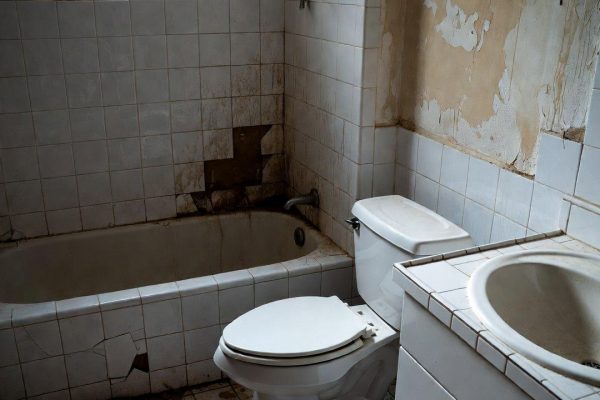
Stage 5: Visible Damage. Water stains appear on the ceiling below. Tiles crack or come loose as the substrate fails. The floor feels spongy. At this point, the entire shower or bathroom must be torn out, the damage repaired, and the space rebuilt from scratch.
We’ve seen this progression firsthand in homes across the Greater Boston area, including many where the original remodel looked beautiful on the surface but cut corners behind the walls.
How to Tell If Your Existing Shower Has Waterproofing Issues
If you’re living with a bathroom that was remodeled years ago, or one that came with the house, here are signs that the waterproofing may be compromised:
- Musty smell in or near the bathroom that persists after cleaning
- Soft or spongy floor in front of the shower or around the toilet
- Tiles that flex when you press on them in the shower
- Recurring mold in grout lines, corners, or the ceiling
- Water stains on the ceiling of the room below the bathroom
- Peeling paint on the bathroom ceiling or walls adjacent to the shower
- Grout that crumbles or falls out despite repeated repairs
If you notice multiple signs, it’s worth having a professional assessment. Our free virtual consultations can help you evaluate whether a tear-out and rebuild is warranted.
Why Waterproofing Is Non-Negotiable in a Quality Remodel
Some steps in a remodel offer flexibility. You can choose between dozens of tile styles. You can opt for a single vanity or a double. You can select brushed nickel or matte black fixtures. Those are preference decisions.
Waterproofing is not a preference. It’s a requirement. Every shower installation and bathtub replacement should include a complete, properly installed waterproofing system. There is no scenario where skipping it is acceptable.
At Cove Bath, waterproofing is built into every project we do. It’s not an add-on or an upgrade. It’s part of the baseline scope because we know that a beautiful bathroom without proper waterproofing is a problem waiting to happen. You can see how we approach every phase of a project on our how it works page.
Why DIY Waterproofing Is Risky
Waterproofing materials are available at home improvement stores, and the application instructions seem straightforward. So it’s tempting for handy homeowners to tackle this step themselves.
Here’s why we’d caution against it.
No margin for error. A single missed seam, an insufficient membrane thickness, or an improperly sloped pan can lead to failure. And you won’t know it failed until the damage is done, potentially years later.
Inspection challenges. Professional waterproofing is tested before tile goes on. A flood test, where the shower pan is filled with water and monitored for 24 hours, verifies that the pan holds. Most DIYers skip this step or don’t know it exists.
Warranty implications. Manufacturer warranties on waterproofing systems typically require installation by trained professionals following specific procedures. DIY installation often voids those warranties.
The stakes are too high. If your DIY tile job has a flaw, you see it every day and can fix it. If your DIY waterproofing has a flaw, you won’t see it until your ceiling is stained and your subfloor is rotting. The risk-to-reward ratio simply doesn’t make sense.
The Bottom Line
Waterproofing is the foundation that everything else in your bathroom remodel rests on. The tile, the fixtures, the glass, the vanity — all of it depends on a properly waterproofed structure to last. It’s not glamorous. You’ll never show it off to guests. But it’s the single most important investment in the longevity of your remodel.
If you’re considering a bathroom remodel in the Greater Boston area, take our online quiz to get a quick estimate and learn more about what’s included in our fixed-price packages. Every Cove Bath project includes professional waterproofing, because we don’t build bathrooms that look good for a year. We build bathrooms that last.
Cove Bath is a bathroom remodeling contractor based in Wellesley, MA, serving homeowners across Greater Boston. We specialize in fixed-price bathroom remodels completed in 1-2 weeks.